MPTI▼
TYPE CARD
MWLT

Classical Liberal

Small government, broad freedom

MMarketWWorldLLibertyTTradition
You put free markets and individual liberty first, while also respecting international openness and traditional values.

Type distribution

0.65%

Those with this type

As of August 5, 2026

The Four Axes

The first letters form your type code · neither pole is better than the other

These four axes follow structures established in political science · see how we measure →

01EconomyMarket 00%
Equality EMarket M

Values markets, growth, and free competition

An economy that grows on its own

You believe the free activity of individuals and businesses grows society as a whole. Competition and achievement deserve fair rewards, and state intervention should stop at what is truly necessary. You cherish self-reliance and the vitality of markets. The balance is complete when you also consider how to embrace those left behind by competition.

02DiplomacyWorld 00%
World WNation N

Values international cooperation, openness, and global solidarity

Open globalism

You see opportunity in cooperation and exchange across borders. Problems like climate and migration can't be solved by one country alone, and you stay open to other cultures and backgrounds. A broad view and a sense of solidarity are your strengths. Your ideals become even sturdier when you also mind the practical interests your own country faces.

03CivilLiberty 00%
Liberty LAuthority A

Values individual freedom, rights, and checks on state power

Individual liberty first

You see individual freedom and rights as a line the state must not cross. Freedom of expression and assembly and private life must be protected, and power must be steadily watched and checked. Respect for diversity and autonomy is your strength. Your conviction matures further when you also weigh how to keep order for the moments when freedoms collide.

04SocietyTradition 00%
Progress PTradition T

Values tradition, stability, and proven customs

Tradition and stability

You give weight to long-proven values and customs. You prefer a gradual, stable path over abrupt change, and you cherish the traditions and pride of the community. Prudence and deep-rooted stability are your strengths. You become even more flexible by keeping a door open to new currents.

In This Room

A fun look at real historical figures mapped onto the four axes — not an academic classification

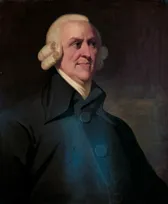
Adam Smith
Adam Smith1723–1790
ADAM SMITH
Author of The Wealth of Nations, father of economics

He preached the 'invisible hand' of free competition and free trade between nations and opposed control of individual enterprise — while placing deep weight on the moral order of custom and sympathy; the archetype of this very type.

Painting: Unknown artist (The Muir portrait), c. 1800 · Public domain · Wikimedia Commons

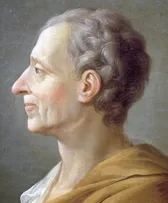
Montesquieu
Montesquieu1689–1755
French Enlightenment thinker who designed the separation of powers

He believed the freedom of commerce breeds peace and designed the separation of powers to check authority — while choosing gradual change suited to each society's traditions.

Painting: After Jacques-Antoine Dassier, 1753–1794 · Public domain · Wikimedia Commons

The story of this type

The society you hope for

A society where 'each to their own' is the default, and where the less the interference, the better both the market and daily life run. And yet what keeps that freedom from sliding into license is, in this view, not the law but long-kept manners and custom.

Underneath these hopes is a sense that freedom is held up by courtesy, not by force. So this stance trusts the restraint and dignity each person keeps for themselves more than dense regulation. But there's a weak link: an order resting on manners and custom struggles to answer what will hold society together once people stop keeping them.

What you want

  • Holds that the less the interference the better market and life both run, so it wants to widen individual freedom over regulation
  • Wants that freedom held in check by long-kept manners and custom rather than by the force of law

What you might miss

  • Leaving order to manners and custom can leave too little to protect the weak in situations where those don't hold
  • Respecting 'each to their own,' it can be slow to be the first to extend a hand to someone who needs help

Overall Conclusion

A balanced moderate

Overall, you lean toward neither side. You weigh progressive and conservative values issue by issue, caring more about substance than camps.

Across the four axes: progressive 2 · conservative 2 — it can differ by axis.

The progressive–conservative label is a rough guide based on how this test defines its axes.

Find out my type too →
Meet all 16 political types →
MPTI · Not affiliated with any party or politician. All types are respected equally.
Privacy Policy · Methodology · Contact · We don't store individual answers