MPTI▼
TYPE CARD
MWLP

Free Pioneer

Freely, into an open world

MMarketWWorldLLibertyPProgress
You broadly support market vitality, individual liberty, international openness, and diversity. You enjoy new attempts and open competition.

Type distribution

13.55%

Those with this type

As of August 5, 2026

The Four Axes

The first letters form your type code · neither pole is better than the other

These four axes follow structures established in political science · see how we measure →

01EconomyMarket 00%
Equality EMarket M

Values markets, growth, and free competition

An economy that grows on its own

You believe the free activity of individuals and businesses grows society as a whole. Competition and achievement deserve fair rewards, and state intervention should stop at what is truly necessary. You cherish self-reliance and the vitality of markets. The balance is complete when you also consider how to embrace those left behind by competition.

02DiplomacyWorld 00%
World WNation N

Values international cooperation, openness, and global solidarity

Open globalism

You see opportunity in cooperation and exchange across borders. Problems like climate and migration can't be solved by one country alone, and you stay open to other cultures and backgrounds. A broad view and a sense of solidarity are your strengths. Your ideals become even sturdier when you also mind the practical interests your own country faces.

03CivilLiberty 00%
Liberty LAuthority A

Values individual freedom, rights, and checks on state power

Individual liberty first

You see individual freedom and rights as a line the state must not cross. Freedom of expression and assembly and private life must be protected, and power must be steadily watched and checked. Respect for diversity and autonomy is your strength. Your conviction matures further when you also weigh how to keep order for the moments when freedoms collide.

04SocietyProgress 00%
Progress PTradition T

Values change, diversity, and reform

Change and diversity

You believe society needs change and reform to keep improving. You stay open to new values and diverse ways of living, and you listen to the voices of minorities and the vulnerable. Openness and inclusion are your strengths. Your changes last longer when you don't rush and also see what should be kept.

In This Room

A fun look at real historical figures mapped onto the four axes — not an academic classification

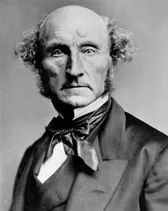
John Stuart Mill
John Stuart Mill1806–1873
MILL
British philosopher, author of On Liberty

He believed free trade and commerce would drive out war, established individual liberty with On Liberty, and championed women's suffrage ahead of his time — liberalism's defining thinker.

Photo: London Stereoscopic Company, c. 1870 · Public domain · Wikimedia Commons

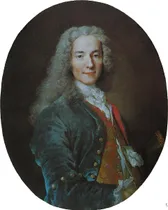
Voltaire
Voltaire1694–1778
French Enlightenment champion of tolerance

He praised the liberty of commercial England and lived as a citizen of the world roaming Europe, fighting for freedom of expression and belief while spending his life attacking old privilege and fanaticism — an icon of the Enlightenment.

Painting: Nicolas de Largillière, c. 1724–1725 · Public domain · Wikimedia Commons

The story of this type

The society you hope for

A society where there's little to ask permission for — whatever you sell, wherever you open your doors. Where a border is not a wall that blocks you but a road that carries you, and where the door stands wide open to new cities, new tools, new ways of living.

Underneath these hopes is a single principle: don't interfere with other people's choices, and in return, don't let yours be interfered with either. So this stance trusts each person choosing freely for themselves more than an order handed down from above. But there's a testing ground here: can it stand up for the freedom of someone whose life looks nothing like its own? The real weight of this stance shows exactly at that point.

What you want

  • Wants a society with little to ask permission for, whatever you sell or wherever you begin, and an open door to new attempts
  • Wants not to interfere with others' choices and not to have its own interfered with, and each person's difference respected

What you might miss

  • Prizing free choice, it reckons less with the fact that the starting line for that choice differs from person to person
  • Putting 'each to their own' first, it can read even help with what someone can't manage alone as interference

Overall Conclusion

Moderately progressive

Overall, you tilt slightly progressive. You sympathize with progressive values, yet remain flexible enough to make conservative choices in some areas.

Across the four axes: progressive 3 · conservative 1 — it can differ by axis.

The progressive–conservative label is a rough guide based on how this test defines its axes.

Find out my type too →
Meet all 16 political types →
MPTI · Not affiliated with any party or politician. All types are respected equally.
Privacy Policy · Methodology · Contact · We don't store individual answers