
MPTI
The 16 Political TypesMethodologyPrivacy Policy
▼
TYPE CARD
MWAT

Open Conservative

Everyone's welcome — just play by our rules

  • MMarket00%
  • WWorld00%
  • AAuthority00%
  • TTradition00%

Each letter of the type code stands for the pole this type leans toward · neither pole is better than the other

Free · No sign-up · About 5 minutes

Find out my type too →
You support free markets and international cooperation, while protecting social order and traditional stability — a balanced conservative.

Type distribution

0.65%

This type's share

As of August 5, 2026

The four axes

These four axes build on well-established frameworks in political science · How we measure →

The descriptions below are addressed to someone with this type.

01EconomyMarket 00%
Equality EMarket M

Values markets, growth, and free competition

An economy that grows on its own

You believe that when individuals and businesses are free to act, society as a whole grows. You think competition and achievement should earn fair rewards, and that the state should step in only where it truly has to. You hope for a society where self-reliance and the energy of the market are alive and well.
02DiplomacyWorld 00%
World WNation N

Values international cooperation, openness, and global solidarity

Open to the world

You see opportunity in cooperation and exchange across borders. You believe problems like climate change and migration are too big for any one country to solve alone and must be worked out together, and you stay open to other cultures and backgrounds. You hope for a world that grows more open and more connected.

03CivilAuthority 00%
Liberty LAuthority A

Values social order, safety, and the authority of the state

Order and safety first

You value a society that runs safely and in good order. You believe that protecting the community calls for a degree of discipline and strong public authority, and a sense of stability matters a great deal to you. You hope for a society where shared rules and good order let everyone feel at ease.

04SocietyTradition 00%
Progress PTradition T

Values tradition, stability, and proven customs

Tradition and stability

You give weight to values and customs that have stood the test of time. You prefer a gradual, steady path to abrupt change, and you cherish your community's traditions and pride. You hope for a society that moves forward at a measured pace while holding on to what has proven its worth.

Figures of this type

A fun look at real historical figures mapped onto the four axes — not an academic classification

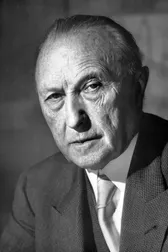
Konrad Adenauer1876–1967
First chancellor of West Germany

He achieved the 'miracle on the Rhine' through a market economy and opened the door to European integration — while holding firmly to the order of strong leadership and Catholic traditional values.

Photo: Katherine Young / Bundesarchiv, B 145 Bild-F078072-0004, 1952 · CC BY-SA 3.0 DE · Wikimedia Commons · adapted: duotone, adaptation shared under the same licence

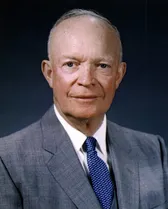
Dwight D. Eisenhower1890–1969
34th US president and Supreme Allied Commander

He kept balanced budgets centered on private enterprise, opened doors to alliances and international cooperation, and stood for law and order alongside the traditional values of faith and family — a model of moderate conservatism.

Photo: White House, 1959 · Public domain · Wikimedia Commons

The story of this type

The society you hope for

A society that readily opens its door to new things from outside, without lightly shaking the order it has lived by or the values it has long held. Where whatever is worth using is taken in without fuss, and yet the basics and the courtesies are kept to the end.

Underneath these hopes is a sense that you can open the door with an easy mind only when the inside is solid. So this stance believes neither in shutting blindly nor in opening blindly, but in an openness that keeps what must be kept. But there's a tension: the outside world always changes faster than the things it means to keep, so it has to keep re-deciding how far to open and where to stop.

What this stance stands for

  • Wants to open its door readily to new things from outside, without lightly shaking the established order and long-held values
  • Wants whatever is useful taken in, and yet the basics and principles, at least, kept to the very end

What this stance can overlook

  • Always weighing whether to open can mean decisions take time and chances slip by
  • The very stance of keeping what must be kept can feel like a high bar to someone who has only just arrived, or to a new way of doing things

The overall picture

Moderately conservative

Progressive on 1 of the four axes, conservative on 3 — each axis can lean its own way.

The progressive–conservative label is a rough guide based on how this test defines its axes.

Find out my type too →

MPTI · Not affiliated with any party or politician. All types are respected equally.

  • Meet all 16 political types ·
  • Privacy Policy ·
  • Methodology ·
  • Contact ·
  • We don't store individual answers