MPTI▼
TYPE CARD
MWAP

Pragmatic Innovator

Competence is progress

MMarketWWorldAAuthorityPProgress
You pursue capable institutions and practical reform on the foundation of markets and the international order. You want results and efficiency to move society forward.

Type distribution

1.94%

Those with this type

As of August 5, 2026

The Four Axes

The first letters form your type code · neither pole is better than the other

These four axes follow structures established in political science · see how we measure →

01EconomyMarket 00%
Equality EMarket M

Values markets, growth, and free competition

An economy that grows on its own

You believe the free activity of individuals and businesses grows society as a whole. Competition and achievement deserve fair rewards, and state intervention should stop at what is truly necessary. You cherish self-reliance and the vitality of markets. The balance is complete when you also consider how to embrace those left behind by competition.

02DiplomacyWorld 00%
World WNation N

Values international cooperation, openness, and global solidarity

Open globalism

You see opportunity in cooperation and exchange across borders. Problems like climate and migration can't be solved by one country alone, and you stay open to other cultures and backgrounds. A broad view and a sense of solidarity are your strengths. Your ideals become even sturdier when you also mind the practical interests your own country faces.

03CivilAuthority 00%
Liberty LAuthority A

Values social order, safety, and the authority of the state

Order and safety first

You value a society that runs safely and in good order. To protect the community, you accept a degree of discipline and strong public authority, and you treasure a sense of stability. Respect for responsibility and norms is your strength. You become even sturdier by watching that individual rights are not crushed along the way.

04SocietyProgress 00%
Progress PTradition T

Values change, diversity, and reform

Change and diversity

You believe society needs change and reform to keep improving. You stay open to new values and diverse ways of living, and you listen to the voices of minorities and the vulnerable. Openness and inclusion are your strengths. Your changes last longer when you don't rush and also see what should be kept.

In This Room

A fun look at real historical figures mapped onto the four axes — not an academic classification

Robert Peel
Robert Peel1788–1850
PEEL
The prime minister who opened the era of free trade

He swept away hundreds of tariffs and repealed the Corn Laws at the cost of splitting his own party, settled border disputes with America by negotiation instead of war, founded London's modern police to secure public order — and, holding that proven abuses must be corrected, chose practical reform over party doctrine, twice.

Painting: Henry William Pickersgill, c. 1851 · Public domain · Wikimedia Commons

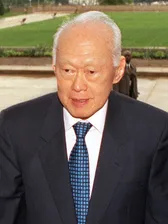
Lee Kuan Yew
Lee Kuan Yew1923–2015
Founding prime minister who designed Singapore

Through free trade and openness he lifted a small port city into a global economic power, and with strict order and strong government transformed his nation within a single generation — a pragmatist architect.

Photo: Robert D. Ward, U.S. Department of Defense, 2002 · Public domain · Wikimedia Commons

The story of this type

The society you hope for

A society where what's good ultimately gets through, and what isn't doesn't, no matter how it's packaged. Where real results are recognized over good intentions, fast execution over long argument, and where that execution comes with clear authority and clear responsibility.

Underneath these hopes is a sense that the market is the most honest test, and that the method that works is already out there somewhere. So this stance trusts proven results and quick execution more than heated debate. But there's a price: the fastest route is plain to see, while people take time to be persuaded — so this stance always has to find its answer between speed and consent.

What you want

  • Wants a society where real results are recognized over good intentions, and fast execution over long argument
  • Wants that execution to come with a clear structure of authority — who decides and who is accountable

What you might miss

  • Putting results and speed first, it easily reads the time spent persuading people and winning consent as 'waste'
  • Prizing results that show up in numbers, it can push aside values, or long-built relationships, that numbers don't capture

Overall Conclusion

A balanced moderate

Overall, you lean toward neither side. You weigh progressive and conservative values issue by issue, caring more about substance than camps.

Across the four axes: progressive 2 · conservative 2 — it can differ by axis.

The progressive–conservative label is a rough guide based on how this test defines its axes.

Find out my type too →
Meet all 16 political types →
MPTI · Not affiliated with any party or politician. All types are respected equally.
Privacy Policy · Methodology · Contact · We don't store individual answers