MPTI▼
TYPE CARD
MNAT

Tradition Defender

Stands on a proven order

MMarketNNationAAuthorityTTradition
You value markets and the state, and the order and traditions of society. You aim for life on a stable, proven foundation.

Type distribution

4.52%

Those with this type

As of August 5, 2026

The Four Axes

The first letters form your type code · neither pole is better than the other

These four axes follow structures established in political science · see how we measure →

01EconomyMarket 00%
Equality EMarket M

Values markets, growth, and free competition

An economy that grows on its own

You believe the free activity of individuals and businesses grows society as a whole. Competition and achievement deserve fair rewards, and state intervention should stop at what is truly necessary. You cherish self-reliance and the vitality of markets. The balance is complete when you also consider how to embrace those left behind by competition.

02DiplomacyNation 00%
World WNation N

Values national sovereignty, identity, and interest

Sovereignty and national interest first

You think of your country's interest and identity before anything else. Protecting sovereignty and security comes before the demands of the international community, and you treasure what has long been kept. Realism and a sense of responsibility are your strengths. Since closing too many doors can mean missed opportunities, flexibility to open up when needed helps too.

03CivilAuthority 00%
Liberty LAuthority A

Values social order, safety, and the authority of the state

Order and safety first

You value a society that runs safely and in good order. To protect the community, you accept a degree of discipline and strong public authority, and you treasure a sense of stability. Respect for responsibility and norms is your strength. You become even sturdier by watching that individual rights are not crushed along the way.

04SocietyTradition 00%
Progress PTradition T

Values tradition, stability, and proven customs

Tradition and stability

You give weight to long-proven values and customs. You prefer a gradual, stable path over abrupt change, and you cherish the traditions and pride of the community. Prudence and deep-rooted stability are your strengths. You become even more flexible by keeping a door open to new currents.

In This Room

A fun look at real historical figures mapped onto the four axes — not an academic classification

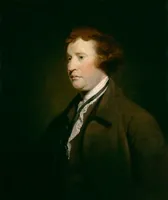
Edmund Burke
Edmund Burke1729–1797
BURKE
British statesman, 'father of conservatism'

He trusted the workings of the market and defended his nation's traditional community, making good order the foundation of everything — a champion of customs and institutions proven across generations.

Painting: Studio of Joshua Reynolds, c. 1769 · Public domain · Wikimedia Commons

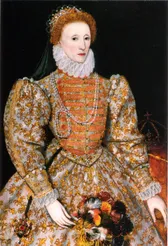
Elizabeth I
Elizabeth I1533–1603
Queen who opened England's golden age

She grew her nation's wealth through maritime trade and defended England's interest among great powers — choosing stability over upheaval on the foundation of royal authority and the traditional order of the established church.

Painting: Unidentified artist (Darnley Portrait), c. 1575 · Public domain · Wikimedia Commons

The story of this type

The society you hope for

A society where the person who queued all night isn't pushed aside by someone cutting in, where the one who followed the rules isn't overtaken by the one who took a shortcut, and where what was built up in earnest doesn't collapse overnight. For that order to hold, this view says, there has to be a sturdy fence, and principles that don't waver.

Underneath these hopes is a sense that tradition is not what's old but what endured a long stretch of time and survived. So this stance trusts what has passed the test of time more than the shiny new. But there is a price: the prudence that puts verification first is right more often than not, yet this stance always carries with it the risk of missing the one change that was the real thing.

What you want

  • Wants a society where, with no shortcuts or line-cutting, the person who kept to the set order is fairly rewarded
  • Holds that not everything new is right, and wants an order and principles that have endured a long time to be kept

What you might miss

  • Guarding against the unverified, it can delay even a genuinely needed change with 'let's watch it a little longer'
  • Putting order and principle first, it can rate low the drive of a newcomer, or the promise of a different way of doing things

Overall Conclusion

Moderately conservative

Overall, you tilt slightly conservative. You respect stability and tradition, yet remain flexible enough to make progressive choices in some areas.

Across the four axes: progressive 0 · conservative 4 — it can differ by axis.

The progressive–conservative label is a rough guide based on how this test defines its axes.

Find out my type too →
Meet all 16 political types →
MPTI · Not affiliated with any party or politician. All types are respected equally.
Privacy Policy · Methodology · Contact · We don't store individual answers