MPTI▼
TYPE CARD
EWLT

Warm Balancer

Cares for others without forgetting the roots

EEqualityWWorldLLibertyTTradition
You support redistribution for the vulnerable and international openness, while also respecting individual liberty and the value of tradition — a moderate balancing type.

Type distribution

1.29%

Those with this type

As of August 5, 2026

The Four Axes

The first letters form your type code · neither pole is better than the other

These four axes follow structures established in political science · see how we measure →

01EconomyEquality 00%
Equality EMarket M

Values distribution, equality, and public redistribution

An economy that shares

You care about society prospering together. As much as what markets produce, you watch whether the fruits are shared fairly, and you believe the state should firmly support those in difficulty. You read a society's maturity in how wide its shared safety net is. Your vision becomes even more persuasive when funding and efficiency are considered alongside it.

02DiplomacyWorld 00%
World WNation N

Values international cooperation, openness, and global solidarity

Open globalism

You see opportunity in cooperation and exchange across borders. Problems like climate and migration can't be solved by one country alone, and you stay open to other cultures and backgrounds. A broad view and a sense of solidarity are your strengths. Your ideals become even sturdier when you also mind the practical interests your own country faces.

03CivilLiberty 00%
Liberty LAuthority A

Values individual freedom, rights, and checks on state power

Individual liberty first

You see individual freedom and rights as a line the state must not cross. Freedom of expression and assembly and private life must be protected, and power must be steadily watched and checked. Respect for diversity and autonomy is your strength. Your conviction matures further when you also weigh how to keep order for the moments when freedoms collide.

04SocietyTradition 00%
Progress PTradition T

Values tradition, stability, and proven customs

Tradition and stability

You give weight to long-proven values and customs. You prefer a gradual, stable path over abrupt change, and you cherish the traditions and pride of the community. Prudence and deep-rooted stability are your strengths. You become even more flexible by keeping a door open to new currents.

In This Room

A fun look at real historical figures mapped onto the four axes — not an academic classification

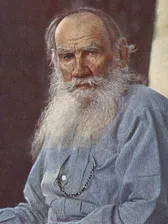
Leo Tolstoy
Leo Tolstoy1828–1910
TOLSTOY
Russian author of War and Peace

Late in life he questioned private land and sought to share his wealth with peasants, championed borderless nonviolent pacifism and conscientious objectors, and resisted censorship and state coercion — while finding his answers in faith and the humble traditions of village life.

Photo: Sergei Prokudin-Gorskii, 1908 · Public domain · Wikimedia Commons

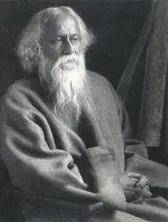
Rabindranath Tagore
Rabindranath Tagore1861–1941
Asia's first Nobel laureate in literature

He worked for cooperatives and rural renewal for poor farmers, preached a cosmopolitanism beyond narrow nationalism, renounced his knighthood in protest of a colonial massacre — and built schools rooted in India's traditions and spirituality.

Photo: Unknown author, c. 1941 · Public domain · Wikimedia Commons

The story of this type

The society you hope for

A society with a solid safety net beside the vulnerable, a hand extended even to trouble in far-off countries, and no one quick to judge how anyone else chooses to live. And at the same time, a society where the things long kept — holiday scenes, customs handed down — don't simply vanish.

Underneath these hopes is a sense that a kinder society grows from its roots. So this stance trusts change that widens the circle while keeping what holds it together, more than change that overturns everything at once. But a hard question always follows: when what you want to widen and what you want to keep collide in the same place, what do you change and what do you leave standing?

What you want

  • Backs a safety net for the vulnerable and wants a hand extended even to hardship in far-off places
  • Wants change to preserve, rather than suddenly tear down, what has been carried for a long time

What you might miss

  • Valuing both what to keep and what to change can mean choosing neither clearly and putting the decision off
  • Cherishing the old can leave it slower to notice where that old thing still sits as discomfort or exclusion for someone

Overall Conclusion

Moderately progressive

Overall, you tilt slightly progressive. You sympathize with progressive values, yet remain flexible enough to make conservative choices in some areas.

Across the four axes: progressive 3 · conservative 1 — it can differ by axis.

The progressive–conservative label is a rough guide based on how this test defines its axes.

Find out my type too →
Meet all 16 political types →
MPTI · Not affiliated with any party or politician. All types are respected equally.
Privacy Policy · Methodology · Contact · We don't store individual answers