MPTI▼
TYPE CARD
EWLP

Open Idealist

Dreams of a more equal, open world

EEqualityWWorldLLibertyPProgress
You value distribution and equality, and broadly support cross-border cooperation, individual liberty, and social change. Your drive to reform toward ideals is strong.

Type distribution

28.39%

Those with this type

As of August 5, 2026

The Four Axes

The first letters form your type code · neither pole is better than the other

These four axes follow structures established in political science · see how we measure →

01EconomyEquality 00%
Equality EMarket M

Values distribution, equality, and public redistribution

An economy that shares

You care about society prospering together. As much as what markets produce, you watch whether the fruits are shared fairly, and you believe the state should firmly support those in difficulty. You read a society's maturity in how wide its shared safety net is. Your vision becomes even more persuasive when funding and efficiency are considered alongside it.

02DiplomacyWorld 00%
World WNation N

Values international cooperation, openness, and global solidarity

Open globalism

You see opportunity in cooperation and exchange across borders. Problems like climate and migration can't be solved by one country alone, and you stay open to other cultures and backgrounds. A broad view and a sense of solidarity are your strengths. Your ideals become even sturdier when you also mind the practical interests your own country faces.

03CivilLiberty 00%
Liberty LAuthority A

Values individual freedom, rights, and checks on state power

Individual liberty first

You see individual freedom and rights as a line the state must not cross. Freedom of expression and assembly and private life must be protected, and power must be steadily watched and checked. Respect for diversity and autonomy is your strength. Your conviction matures further when you also weigh how to keep order for the moments when freedoms collide.

04SocietyProgress 00%
Progress PTradition T

Values change, diversity, and reform

Change and diversity

You believe society needs change and reform to keep improving. You stay open to new values and diverse ways of living, and you listen to the voices of minorities and the vulnerable. Openness and inclusion are your strengths. Your changes last longer when you don't rush and also see what should be kept.

In This Room

A fun look at real historical figures mapped onto the four axes — not an academic classification

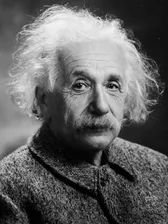
Albert Einstein
Albert Einstein1879–1955
EINSTEIN
Physicist of relativity and pacifist intellectual

From "Why Socialism?" on inequality to the dream of world government, from defying McCarthyism for freedom of thought to standing with the civil rights movement — a scientist who carried all four values at once.

Photo: Orren Jack Turner, 1947 · Public domain · Wikimedia Commons

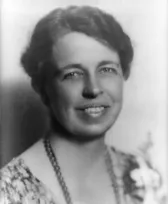
Eleanor Roosevelt
Eleanor Roosevelt1884–1962
Human rights champion and architect of the UN Universal Declaration

From New Deal welfare to the Universal Declaration of Human Rights, she spent a lifetime practicing rights beyond borders, equality for the vulnerable, and change against discrimination.

Photo: Unknown author, 1933 · Public domain · Wikimedia Commons

The story of this type

The society you hope for

A society where you can see a doctor without dreading the bill, where the same work earns the same pay, and where the house you were born into doesn't decide how far you get to go. Where neither a disaster on the far side of the planet nor an unfairness close to home is waved away with 'that's just how things are.'

Underneath these hopes is a refusal to file injustice under 'unavoidable.' So rather than leave things to the market alone, this stance backs strong institutions that hold everyone up evenly. But there's a tension inside it: equality needs strong institutions, yet power that pools in one place is exactly what it distrusts — so it has to keep asking, alongside every reform, 'and who is watching that power?'

What you want

  • Sees the burden of illness or an unequal start as a problem for society to solve together, not for each person to face alone
  • Refuses to treat a distant disaster or injustice as 'someone else's business'

What you might miss

  • Wanting strong institutions for equality while guarding against their growing power can leave it hesitant to build the muscle to actually get things done
  • The range of things it cares about is so wide that deciding what to fix first gets hard

Overall Conclusion

Moderately progressive

Overall, you tilt slightly progressive. You sympathize with progressive values, yet remain flexible enough to make conservative choices in some areas.

Across the four axes: progressive 4 · conservative 0 — it can differ by axis.

The progressive–conservative label is a rough guide based on how this test defines its axes.

Find out my type too →
Meet all 16 political types →
MPTI · Not affiliated with any party or politician. All types are respected equally.
Privacy Policy · Methodology · Contact · We don't store individual answers