MPTI▼
TYPE CARD
EWAT

Orderly Mediator

Holds openness and stability together

EEqualityWWorldAAuthorityTTradition
You support welfare and openness, but seek change on the foundation of social order and traditional stability — a careful, coordinating type.

Type distribution

1.94%

Those with this type

As of August 5, 2026

The Four Axes

The first letters form your type code · neither pole is better than the other

These four axes follow structures established in political science · see how we measure →

01EconomyEquality 00%
Equality EMarket M

Values distribution, equality, and public redistribution

An economy that shares

You care about society prospering together. As much as what markets produce, you watch whether the fruits are shared fairly, and you believe the state should firmly support those in difficulty. You read a society's maturity in how wide its shared safety net is. Your vision becomes even more persuasive when funding and efficiency are considered alongside it.

02DiplomacyWorld 00%
World WNation N

Values international cooperation, openness, and global solidarity

Open globalism

You see opportunity in cooperation and exchange across borders. Problems like climate and migration can't be solved by one country alone, and you stay open to other cultures and backgrounds. A broad view and a sense of solidarity are your strengths. Your ideals become even sturdier when you also mind the practical interests your own country faces.

03CivilAuthority 00%
Liberty LAuthority A

Values social order, safety, and the authority of the state

Order and safety first

You value a society that runs safely and in good order. To protect the community, you accept a degree of discipline and strong public authority, and you treasure a sense of stability. Respect for responsibility and norms is your strength. You become even sturdier by watching that individual rights are not crushed along the way.

04SocietyTradition 00%
Progress PTradition T

Values tradition, stability, and proven customs

Tradition and stability

You give weight to long-proven values and customs. You prefer a gradual, stable path over abrupt change, and you cherish the traditions and pride of the community. Prudence and deep-rooted stability are your strengths. You become even more flexible by keeping a door open to new currents.

In This Room

A fun look at real historical figures mapped onto the four axes — not an academic classification

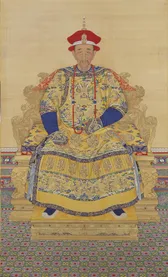
Kangxi Emperor
Kangxi Emperor1654–1722
KANGXI
Fourth emperor of Qing China

He looked after his people with tax relief and famine aid and welcomed even the science of Western missionaries — while guarding sixty years of peace and order on strong central rule and Confucian tradition.

Painting: Anonymous Qing court painter, late Kangxi period · Public domain · Wikimedia Commons

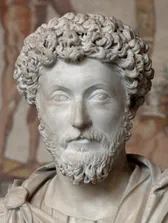
Marcus Aurelius
Marcus Aurelius121–180
Rome's philosopher-emperor, author of Meditations

He sold palace treasures rather than tax his people for war, embraced the Stoic creed that 'as a man, my country is the world' — and upheld the emperor's authority and Rome's traditional duties to the end.

Photo: Bibi Saint-Pol, 2007 (bust, Glyptothek Munich) · Public domain · Wikimedia Commons

The story of this type

The society you hope for

A society that helps struggling neighbors together and cooperates with the wider world — but does all of it in a set order, by tested methods. Where the door stays open, yet things are examined before they're taken in, and the new is welcomed without being rushed.

Underneath these hopes is a sense that goodwill without order hurts the weakest first. So this stance trusts stability that has passed a test and lasts, more than fast change. But there is a price: prudence keeps good things around for a long time, and in exactly the same measure this stance carries the risk of missing the moment when it truly should have hurried.

What you want

  • Backs a society that helps struggling neighbors together, but wants that help to run along a set procedure
  • Wants the door open to new things from outside, but wants them checked thoroughly for problems before they're taken in

What you might miss

  • Because it prizes procedure and vetting, its caution can feel like a 'no' to someone whose need is urgent right now
  • Weighing the risks first can mean missing a good opportunity that had to be seized quickly

Overall Conclusion

A balanced moderate

Overall, you lean toward neither side. You weigh progressive and conservative values issue by issue, caring more about substance than camps.

Across the four axes: progressive 2 · conservative 2 — it can differ by axis.

The progressive–conservative label is a rough guide based on how this test defines its axes.

Find out my type too →
Meet all 16 political types →
MPTI · Not affiliated with any party or politician. All types are respected equally.
Privacy Policy · Methodology · Contact · We don't store individual answers