
MPTI
The 16 Political TypesMethodologyPrivacy Policy
▼
TYPE CARD
ENLT

Community Guardian

Lends a hand, but stays out of your private life

  • EEquality00%
  • NNation00%
  • LLiberty00%
  • TTradition00%

Each letter of the type code stands for the pole this type leans toward · neither pole is better than the other

Free · No sign-up · About 5 minutes

Find out my type too →
You cherish local solidarity and generous welfare, while trying to protect both tradition and individual liberty.

Type distribution

2.58%

This type's share

As of August 5, 2026

The four axes

These four axes build on well-established frameworks in political science · How we measure →

The descriptions below are addressed to someone with this type.

01EconomyEquality 00%
Equality EMarket M

Values even distribution, equality, and redistribution by the state

An economy that shares

Everyone doing well together matters to you. You care not only about what markets produce but also about whether the gains are spread evenly, and you believe the state should give solid support to people who are struggling. You hope for a society whose shared safety net is wide enough that no one is left behind.
02DiplomacyNation 00%
World WNation N

Values national sovereignty, identity, and interest

Sovereignty and national interest first

You think of your own country's interests and identity before anything else. You believe protecting its sovereignty and security comes before the demands of the international community, and you treasure what has long been safeguarded. You hope your country engages with the world while holding firmly to what is its own.

03CivilLiberty 00%
Liberty LAuthority A

Values individual freedom, rights, and checks on state power

Individual liberty first

You see individual freedom and rights as a line the state must not cross. You believe free expression, freedom of assembly, and private life must be protected, and that power must always be watched and held in check. You hope for a society where diversity and personal autonomy have room to breathe.

04SocietyTradition 00%
Progress PTradition T

Values tradition, stability, and proven customs

Tradition and stability

You give weight to values and customs that have stood the test of time. You prefer a gradual, steady path to abrupt change, and you cherish your community's traditions and pride. You hope for a society that moves forward at a measured pace while holding on to what has proven its worth.

Figures of this type

A fun look at real historical figures mapped onto the four axes — not an academic classification

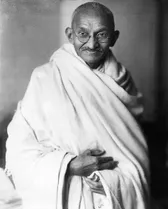
Mahatma Gandhi1869–1948
Leader of India's independence movement

He pursued India's self-reliance and an economy measured by how its poorest fare, resisted unjust power through nonviolent disobedience — and kept faith with the values of the traditional village community to the very end.

Photo: Elliott & Fry, 1931 · Public domain · Wikimedia Commons

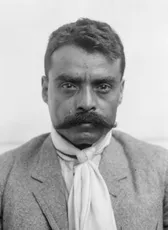
Emiliano Zapata1879–1919
Peasant leader of the Mexican Revolution

Remembered ever since in the words 'Land and Liberty', he fought to return stolen fields to the villages and their farmers, defying the dictatorships of Díaz and Huerta for his homeland's right to live by its own lights rather than any distant design — and found his answer in the ejido, the age-old custom of tilling the land in common.

Photo: Agustín Víctor Casasola, 1914 · Public domain · Wikimedia Commons

The story of this type

The society you hope for

A society where no one close by goes hungry, yet where that help never turns into meddling or control. Where the shop you've gone to for years and the farm down the road don't easily close their doors, and where what's familiar and what we make ourselves come first.

Underneath these hopes is a sense that helping and interfering are only a hair apart. So this stance trusts care that comes from the heart more than care imposed from above. But there is a limit: it is deeply moved by someone nearby whose face it can see, and by the same token slower to act for people far away, or for problems that show up only as numbers.

What this stance stands for

  • Tries to make sure no one nearby is left in hardship, while wanting that help to come from the heart rather than be forced
  • Wants the old local shop, the neighbors, and the things we make ourselves not to be easily pushed aside

What this stance can overlook

  • It is deeply moved by someone in trouble close by, but can be relatively less moved by problems that are distant or visible only as statistics
  • Looking after the familiar and our own first can make it harder for newcomers, or for new ways of doing things, to find a way in

The overall picture

A balanced moderate

Progressive on 2 of the four axes, conservative on 2 — each axis can lean its own way.

The progressive–conservative label is a rough guide based on how this test defines its axes.

Find out my type too →

MPTI · Not affiliated with any party or politician. All types are respected equally.

  • Meet all 16 political types ·
  • Privacy Policy ·
  • Methodology ·
  • Contact ·
  • We don't store individual answers