MPTI▼
TYPE CARD
ENLP

Grassroots Reformer

Change starts with our own society

EEqualityNNationLLibertyPProgress
You pursue equality, individual liberty, and change within your own national community. You prefer reform that starts from the ground and citizens' voices.

Type distribution

7.74%

Those with this type

As of August 5, 2026

The Four Axes

The first letters form your type code · neither pole is better than the other

These four axes follow structures established in political science · see how we measure →

01EconomyEquality 00%
Equality EMarket M

Values distribution, equality, and public redistribution

An economy that shares

You care about society prospering together. As much as what markets produce, you watch whether the fruits are shared fairly, and you believe the state should firmly support those in difficulty. You read a society's maturity in how wide its shared safety net is. Your vision becomes even more persuasive when funding and efficiency are considered alongside it.

02DiplomacyNation 00%
World WNation N

Values national sovereignty, identity, and interest

Sovereignty and national interest first

You think of your country's interest and identity before anything else. Protecting sovereignty and security comes before the demands of the international community, and you treasure what has long been kept. Realism and a sense of responsibility are your strengths. Since closing too many doors can mean missed opportunities, flexibility to open up when needed helps too.

03CivilLiberty 00%
Liberty LAuthority A

Values individual freedom, rights, and checks on state power

Individual liberty first

You see individual freedom and rights as a line the state must not cross. Freedom of expression and assembly and private life must be protected, and power must be steadily watched and checked. Respect for diversity and autonomy is your strength. Your conviction matures further when you also weigh how to keep order for the moments when freedoms collide.

04SocietyProgress 00%
Progress PTradition T

Values change, diversity, and reform

Change and diversity

You believe society needs change and reform to keep improving. You stay open to new values and diverse ways of living, and you listen to the voices of minorities and the vulnerable. Openness and inclusion are your strengths. Your changes last longer when you don't rush and also see what should be kept.

In This Room

A fun look at real historical figures mapped onto the four axes — not an academic classification

Nelson Mandela
Nelson Mandela1918–2013
MANDELA
South Africa's first Black president, Nobel Peace laureate

Carrying the Freedom Charter with its vision of shared wealth, he devoted his life to restoring his people's dignity — and through 27 years in prison stood against unjust power until the old order of apartheid fell.

Photo: South Africa The Good News / www.sagoodnews.co.za, 2008 · CC BY 2.0 · Wikimedia Commons · adapted: duotone

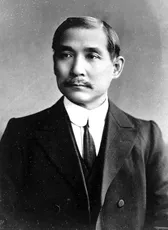
Sun Yat-sen
Sun Yat-sen1866–1925
Leader of China's 1911 revolution

With people's livelihood, national self-determination, and civil rights as his three pillars, he overturned two thousand years of dynastic rule, root and branch.

Photo: Shanghai Tongsheng Photo Studio (K.T. Thompson), 1911 · Public domain · Wikimedia Commons

The story of this type

The society you hope for

A society where the livelihood of the person right next to you improves before the far-off matters do. Where the problem in front of you — a friend's overdue wages, the streetlight in a dark alley — gets solved first, and where that change starts not from orders handed down from above but from the people who actually live it.

Underneath these hopes is a sense that a livelihood actually getting better matters more than equality spoken in words. So this stance trusts real change you can touch more than grand slogans. But there's a tension: changing things together takes organization, and as an organization grows it can seem to press down on the individual — so this stance is always weighing gathering big power against protecting individual freedom.

What you want

  • Puts the livelihood of the person right next to you actually improving ahead of equality spoken only in words
  • Wants change to start from the people who live it, not to come down from above

What you might miss

  • Focusing on problems within arm's reach can mean big, structural problems get set aside as 'not mine to fix'
  • Guarding against the power of large organizations can end up keeping the very organization and solidarity that big change needs at arm's length

Overall Conclusion

Moderately progressive

Overall, you tilt slightly progressive. You sympathize with progressive values, yet remain flexible enough to make conservative choices in some areas.

Across the four axes: progressive 3 · conservative 1 — it can differ by axis.

The progressive–conservative label is a rough guide based on how this test defines its axes.

Find out my type too →
Meet all 16 political types →
MPTI · Not affiliated with any party or politician. All types are respected equally.
Privacy Policy · Methodology · Contact · We don't store individual answers