MPTI▼
TYPE CARD
ENAT

Traditional Communitarian

Moves forward together with cohesion and stability

EEqualityNNationAAuthorityTTradition
You value the cohesion and welfare of the national community, and the stability and traditions of society. You trust life within an order kept together.

Type distribution

1.29%

Those with this type

As of August 5, 2026

The Four Axes

The first letters form your type code · neither pole is better than the other

These four axes follow structures established in political science · see how we measure →

01EconomyEquality 00%
Equality EMarket M

Values distribution, equality, and public redistribution

An economy that shares

You care about society prospering together. As much as what markets produce, you watch whether the fruits are shared fairly, and you believe the state should firmly support those in difficulty. You read a society's maturity in how wide its shared safety net is. Your vision becomes even more persuasive when funding and efficiency are considered alongside it.

02DiplomacyNation 00%
World WNation N

Values national sovereignty, identity, and interest

Sovereignty and national interest first

You think of your country's interest and identity before anything else. Protecting sovereignty and security comes before the demands of the international community, and you treasure what has long been kept. Realism and a sense of responsibility are your strengths. Since closing too many doors can mean missed opportunities, flexibility to open up when needed helps too.

03CivilAuthority 00%
Liberty LAuthority A

Values social order, safety, and the authority of the state

Order and safety first

You value a society that runs safely and in good order. To protect the community, you accept a degree of discipline and strong public authority, and you treasure a sense of stability. Respect for responsibility and norms is your strength. You become even sturdier by watching that individual rights are not crushed along the way.

04SocietyTradition 00%
Progress PTradition T

Values tradition, stability, and proven customs

Tradition and stability

You give weight to long-proven values and customs. You prefer a gradual, stable path over abrupt change, and you cherish the traditions and pride of the community. Prudence and deep-rooted stability are your strengths. You become even more flexible by keeping a door open to new currents.

In This Room

A fun look at real historical figures mapped onto the four axes — not an academic classification

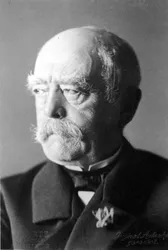
Otto von Bismarck
Otto von Bismarck1815–1898
BISMARCK
The 'Iron Chancellor' who unified Germany

He supported workers' lives with the world's first social insurance, and upheld realist diplomacy centered on national interest, a strong state, and the traditional order of monarchy all at once.

Photo: Jacques Pilartz, 1890 · Public domain · Wikimedia Commons (German Federal Archive)

Saladin
Saladin1137–1193
Sultan remembered for his magnanimity

He gave his wealth freely to soldiers and the poor and devoted himself to reclaiming his community's lands — while upholding the sultan's authority and the order of traditional faith.

Painting: Cristofano dell'Altissimo, before 1568 · Public domain · Wikimedia Commons

The story of this type

The society you hope for

A society where no one is thrown away. Where the nation holds up those in hardship, but that care begins with my family, my neighbors, my own country first. Where rules exist not to squeeze people but to keep them from harm, and where the weakest are looked after before anyone else.

Underneath these hopes is a sense that a good society is an order in which no one is abandoned. So this stance trusts quiet, steady care and order more than loud change. But there's a hard question: going together means everyone keeping the rules — so how far do you go in embracing someone who won't follow them as part of the same community?

What you want

  • Holds that the nation should hold up those in hardship, while wanting that care to start with one's own family, neighbors, and country first
  • Wants a quiet, steady order in which rules exist to keep people from harm rather than to bind them

What you might miss

  • Prizing going together as one community, it always finds it hard to say how far to embrace someone who has stepped outside the rules or the order
  • Holding on to a familiar order can leave it a step slow to take in a better way that came from outside

Overall Conclusion

Moderately conservative

Overall, you tilt slightly conservative. You respect stability and tradition, yet remain flexible enough to make progressive choices in some areas.

Across the four axes: progressive 1 · conservative 3 — it can differ by axis.

The progressive–conservative label is a rough guide based on how this test defines its axes.

Find out my type too →
Meet all 16 political types →
MPTI · Not affiliated with any party or politician. All types are respected equally.
Privacy Policy · Methodology · Contact · We don't store individual answers